

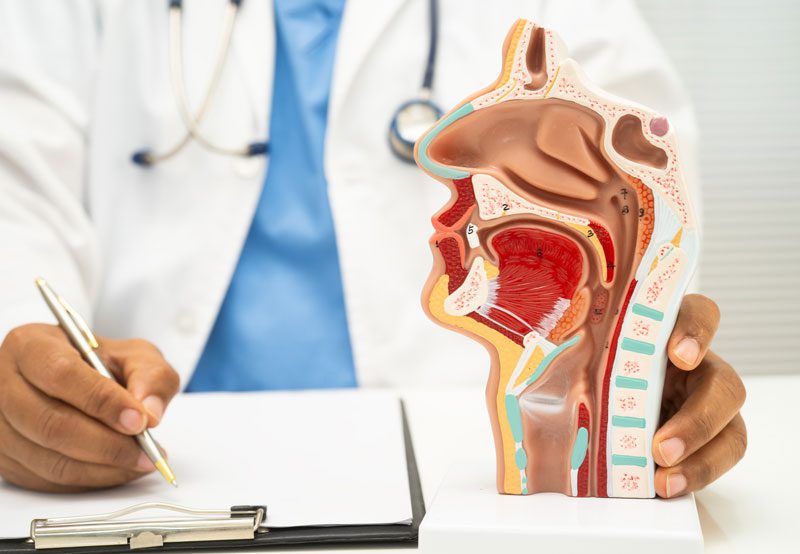
Microvascular free flap reconstruction is an advanced surgical technique used to restore form and function after extensive head and neck surgery, most commonly following cancer resection. The procedure involves transferring tissue such as skin, muscle, bone, or a combination from one part of the body to another and reconnecting its blood vessels to vessels in the neck using microsurgical techniques. This approach allows reconstruction of complex defects involving the jaw, tongue, throat, face, or neck with living tissue that closely matches the functional and structural requirements of the area. Microvascular free flap reconstruction plays a critical role in modern head and neck oncologic care.
What It Treats
Microvascular free flap reconstruction is used to repair large or complex defects that cannot be adequately reconstructed with local or regional tissue alone.
- Post-oncologic defects: Following resection of cancers of the oral cavity, pharynx, larynx, salivary glands, thyroid, skin, or skull base
- Bone loss: Reconstruction of the mandible or maxilla after tumor invasion or removal
- Extensive soft tissue loss: Including defects of the tongue, floor of mouth, cheek, pharynx, or neck
- Functional deficits: Affecting speech, swallowing, airway protection, or facial contour
- Radiated or scarred tissue beds: Where local tissue quality is insufficient for healing
This technique allows restoration of both structure and function in a single surgical setting.

How the Procedure Works
Microvascular free flap reconstruction is performed during the same operation as tumor removal in many cases and requires close coordination between oncologic and reconstructive surgeons.
- Donor tissue selection: Tissue is harvested from a donor site such as the forearm, thigh, leg, or shoulder region based on reconstructive needs
- Tumor resection: The cancer is removed with appropriate margins, creating a surgical defect
- Flap transfer: The harvested tissue is shaped to match the defect and placed into the reconstruction site
- Microvascular anastomosis: Blood vessels from the flap are connected to vessels in the neck under a microscope to restore circulation
- Structural reconstruction: Bone-containing flaps may be shaped to recreate the jaw or facial skeleton
- Soft tissue restoration: Skin and muscle components are positioned to support swallowing, speech, and contour
Successful blood flow through the reconstructed vessels is critical to flap survival.
Benefits of the Procedure
Microvascular free flap reconstruction offers significant advantages for complex head and neck reconstruction.
- Durable reconstruction: Provides living tissue with its own blood supply
- Functional restoration: Supports speech, swallowing, and airway stability
- Anatomic flexibility: Allows tailored reconstruction of large or multi-tissue defects
- Single-stage reconstruction: Enables immediate repair at the time of tumor removal
- Enhanced quality of life: Restores form and function after extensive surgery
When performed by experienced teams, success rates are high.
What to Expect
Recovery after microvascular free flap reconstruction is more involved than with smaller reconstructive procedures.
- Hospital stay: Typically several days to monitor flap viability and overall recovery
- Intensive monitoring: Frequent checks of blood flow to the flap during the early postoperative period
- Temporary support: Feeding tubes or tracheostomy may be required depending on reconstruction site
- Donor site healing: The area where tissue was harvested requires its own postoperative care
- Rehabilitation: Speech and swallowing therapy are commonly needed
- Gradual recovery: Functional improvement continues over weeks to months
Close follow-up is essential to ensure proper healing and address complications promptly.
Is It Right for You?
Microvascular free flap reconstruction is considered for patients undergoing extensive head and neck surgery when restoration of complex defects is required. Candidacy depends on overall health, vascular status, extent of the defect, and functional goals. Evaluation by a specialized head and neck reconstructive team allows for individualized planning, coordination with oncologic treatment, and clear discussion of expected outcomes, risks, and recovery.