
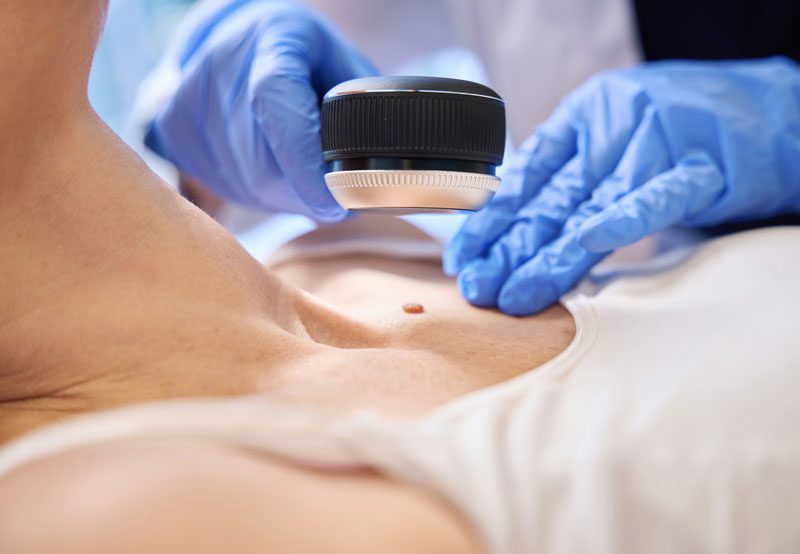

Skin cancer affecting the head and neck region is common due to chronic sun exposure and involves areas such as the face, scalp, ears, lips, and neck. Because these regions contain critical structures related to vision, hearing, breathing, speech, and facial expression, management of skin cancer in the ear, nose, and throat (ENT) setting requires specialized surgical expertise. While many head and neck skin cancers grow slowly, some are aggressive and can invade deeper tissues or spread to lymph nodes if not treated appropriately.
Causes
Skin cancer develops when skin cells accumulate DNA damage, most often from ultraviolet radiation exposure. Several risk factors contribute to disease development.
- Ultraviolet (UV) exposure: Chronic sun exposure is the primary cause, particularly for cancers of the face, scalp, ears, and lips
- Fair skin and light features: Individuals with lighter skin, hair, or eye color have higher risk
- History of sunburns: Especially blistering sunburns earlier in life
- Age: Risk increases with cumulative lifetime sun exposure
- Immunosuppression: Weakened immune systems increase risk of aggressive disease
- Radiation exposure: Prior therapeutic radiation to the head and neck
- Chronic wounds or scars: Long-standing skin injury can predispose to malignancy

Symptoms
Skin cancers of the head and neck may appear subtle at first and are often mistaken for benign skin changes. Persistence or progression is a key warning sign.
- A sore that does not heal
- A scaly, crusted, or bleeding lesion
- A pearly or translucent bump
- A firm or ulcerated growth
- A dark or irregularly pigmented lesion
- Changes in size, shape, or color of an existing lesion
- Numbness, pain, or tenderness (suggesting deeper invasion)
- Enlarged neck lymph nodes (in more advanced disease)
Lesions on the ears, lips, and scalp are at higher risk for aggressive development.
Diagnosis
Diagnosis focuses on confirming malignancy and determining the depth and extent of disease.
- Comprehensive head and neck examination: Including inspection of the skin and palpation of regional lymph nodes
- Skin biopsy: Confirms the diagnosis and identifies cancer type
- Imaging studies: Computed tomography or magnetic resonance imaging may be used for larger, deeply invasive, or recurrent tumors
- Lymph node evaluation: Ultrasound or biopsy when nodal spread is suspected
- Pathologic assessment: Determines margins, depth of invasion, and high-risk features
Treatment Options
Treatment is individualized based on cancer type, size, depth, location, and risk of spread, with an emphasis on complete removal and preservation of function and appearance.
- Surgical excision: Primary treatment for most head and neck skin cancers
- Mohs micrographic surgery: Often used for facial and high-risk tumors to maximize tissue preservation while ensuring complete removal
- Wide local excision: Used for melanomas and select non-melanoma skin cancers
- Reconstructive surgery: Local flaps, skin grafts, or complex reconstruction to restore form and function
- Sentinel lymph node biopsy: Considered for melanomas or high-risk squamous cell carcinomas
- Radiation therapy: Used when surgery is not feasible or as adjuvant treatment in high-risk cases
Management often involves coordination between ENT surgeons, dermatologists, pathologists, and oncologists.
When to See a Specialist
Evaluation by an ENT or head and neck specialist is recommended for any persistent or changing skin lesion on the face, scalp, ears, lips, or neck, particularly if it bleeds, ulcerates, or fails to heal. Early specialist assessment improves cure rates and allows for treatment approaches that preserve critical structures, facial function, and cosmetic outcomes.