
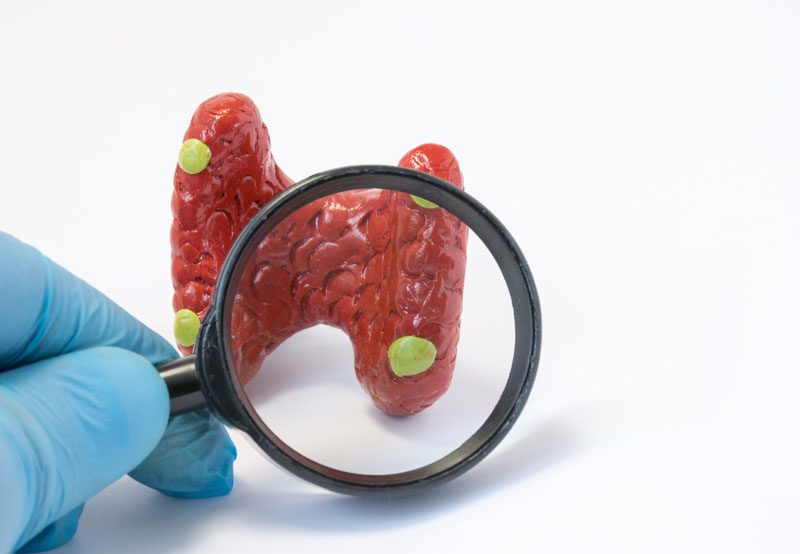

Hyperparathyroidism is a disorder in which one or more of the parathyroid glands produce excessive amounts of parathyroid hormone (PTH). The parathyroid glands are four small endocrine glands located behind the thyroid that regulate calcium and phosphorus balance in the body. Elevated PTH levels lead to increased blood calcium (hypercalcemia), which can affect bones, kidneys, cardiovascular health, and neurologic function. Hyperparathyroidism is often underdiagnosed because symptoms may be subtle or attributed to aging or other conditions.
Causes
Hyperparathyroidism is classified based on the underlying mechanism driving excess hormone production.
- Primary hyperparathyroidism: Most commonly caused by a benign parathyroid adenoma; less commonly due to hyperplasia of multiple glands or, rarely, parathyroid carcinoma
- Secondary hyperparathyroidism: A compensatory response to chronically low calcium levels, often due to chronic kidney disease or vitamin D deficiency
- Tertiary hyperparathyroidism: Persistent overproduction of PTH after long-standing secondary hyperparathyroidism, typically in patients with advanced kidney disease
- Genetic syndromes: Conditions such as multiple endocrine neoplasia may involve parathyroid overactivity
- Medication-related factors: Certain medications can alter calcium or vitamin D metabolism and contribute to abnormal PTH regulation
Primary hyperparathyroidism is the most common form encountered in clinical practice.

Symptoms
Symptoms vary widely and may be mild, nonspecific, or severe depending on calcium levels and disease duration. Some individuals are asymptomatic and diagnosed through routine laboratory testing.
- Bone-related symptoms: Bone pain, osteoporosis, or increased fracture risk
- Kidney manifestations: Kidney stones, frequent urination, or reduced kidney function
- Neuromuscular symptoms: Fatigue, muscle weakness, or joint discomfort
- Neurocognitive changes: Difficulty concentrating, memory issues, depression, or irritability
- Gastrointestinal symptoms: Abdominal pain, constipation, nausea, or loss of appetite
Untreated hyperparathyroidism can lead to progressive bone loss, kidney damage, and cardiovascular complications.
Diagnosis
Diagnosis is based on biochemical findings supported by imaging studies when surgery is considered.
- Blood tests: Elevated calcium levels with inappropriately high parathyroid hormone levels
- Vitamin D testing: To evaluate for deficiency or contributing factors
- Urine studies: Measurement of calcium excretion to assess kidney involvement and exclude other conditions
- Bone density testing: Dual-energy X-ray absorptiometry (DEXA) to assess bone loss
- Imaging studies: Ultrasound, sestamibi scan, or four-dimensional computed tomography used to localize abnormal parathyroid glands prior to surgery
Imaging is used for surgical planning rather than to establish the diagnosis.
Treatment Options
Treatment depends on the type of hyperparathyroidism, symptom severity, and risk of complications.
- Observation: Appropriate for select patients with mild primary hyperparathyroidism and no end-organ damage, with regular monitoring of calcium, bone density, and kidney function
- Medical management: Includes vitamin D repletion, calcium management, and medications such as calcimimetics in patients who are not surgical candidates
- Parathyroidectomy: Surgical removal of the abnormal gland or glands is the definitive treatment for primary hyperparathyroidism and offers high cure rates
- Management of secondary causes: Treatment of kidney disease, vitamin D deficiency, or underlying metabolic abnormalities in secondary hyperparathyroidism
Surgical treatment is typically performed using focused or minimally invasive techniques when imaging successfully localizes the abnormal gland.
When to See a Specialist
Referral to an endocrinologist or head and neck surgeon is recommended for patients with elevated calcium and parathyroid hormone levels, kidney stones, osteoporosis, or progressive symptoms. Early specialist evaluation allows for accurate diagnosis, appropriate monitoring, and timely intervention to prevent long-term complications affecting bone, kidney, and overall health.