
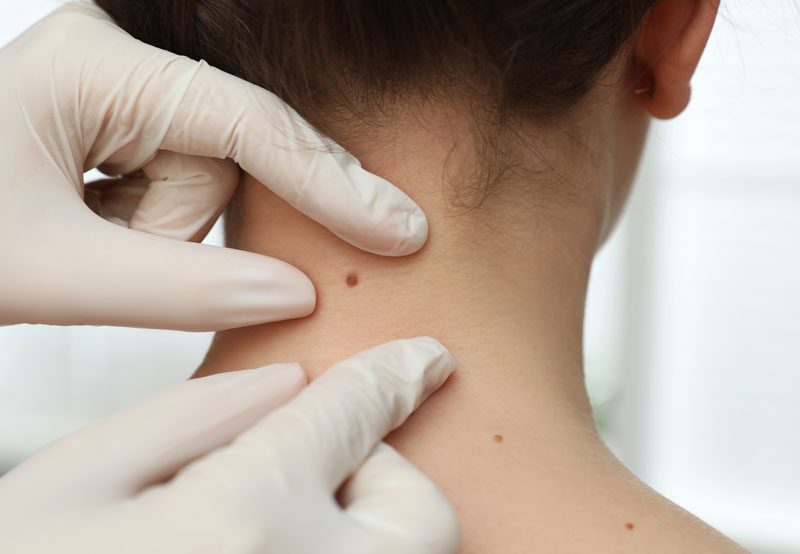

Management of advanced cutaneous cancer involves comprehensive evaluation and coordinated treatment of skin cancers that have grown deeply, recurred after prior treatment, or spread to regional lymph nodes or surrounding structures. In the head and neck region, advanced cutaneous cancers most commonly include aggressive squamous cell carcinoma, high-risk basal cell carcinoma, and melanoma. These cancers require specialized care due to their proximity to critical anatomy, including facial nerves, major blood vessels, the skull base, and sensory organs. Treatment planning emphasizes complete cancer control while preserving function, appearance, and quality of life whenever possible.
What It Treats
Management of advanced cutaneous cancer is indicated for skin cancers with high-risk or aggressive features.
- Locally advanced skin cancer: Tumors with deep soft tissue, cartilage, bone, or nerve involvement
- Recurrent disease: Cancer that has returned after prior surgery, radiation, or topical therapy
- Perineural invasion: Cancer spread along nerves, often associated with pain, numbness, or weakness
- Regional lymph node metastases: Spread to lymph nodes
- High-risk locations: Tumors involving the scalp, ear, lip, eyelid, nose, or temple
- Aggressive histologic subtypes: Including poorly differentiated squamous cell carcinoma or desmoplastic melanoma
These cases often extend beyond the scope of routine dermatologic treatment.

How the Procedure Works
Management is individualized and frequently involves a combination of surgical and nonsurgical therapies delivered in a coordinated sequence.
- Comprehensive evaluation: Includes detailed skin examination, assessment of nerve function, and evaluation of regional lymph nodes
- Advanced imaging: Computed tomography, magnetic resonance imaging, or positron emission tomography used to assess depth of invasion and spread
- Wide oncologic resection: Surgical removal of the tumor with appropriate margins, which may include skin, soft tissue, cartilage, bone, or involved nerves
- Lymph node management: Parotidectomy or neck dissection performed when nodal disease is present or suspected
- Immediate reconstruction: Reconstructive surgery is often performed during the same operation to restore form and function
- Pathologic risk assessment: Final pathology guides the need for additional therapy
Treatment sequencing is carefully coordinated to avoid compromising oncologic outcomes.
Benefits of the Procedure
Comprehensive management of advanced cutaneous cancer offers several important advantages.
- Improved local and regional cancer control: Addresses both the primary tumor and areas of spread
- Accurate staging: Guides decisions regarding adjuvant therapy
- Preservation of critical structures: Specialized surgical techniques minimize functional loss
- Single-stage surgical care: Resection and reconstruction are often completed together
- Foundation for adjuvant therapy: Optimizes outcomes when radiation or systemic therapy is required
Early involvement of a specialized head and neck team improves outcomes in complex cases.
What to Expect
Treatment and recovery vary based on tumor extent and therapies required.
- Hospital stay: May be required following extensive resection or reconstruction
- Temporary functional changes: Including weakness, numbness, or swelling during early recovery
- Rehabilitation: Physical therapy or facial nerve rehabilitation may be recommended when nerves are involved
- Adjuvant therapy: Radiation therapy, immunotherapy, or targeted therapy may be advised for high-risk features
- Close surveillance: Regular follow-up is essential to monitor healing and detect recurrence early
Recovery and long-term outcomes depend on tumor biology, extent of disease, and adherence to follow-up care.
Is It Right for You?
Management of advanced cutaneous cancer is appropriate for patients with aggressive, recurrent, or regionally metastatic skin cancers of the head and neck. Candidacy depends on tumor characteristics, prior treatments, overall health, and functional goals. Evaluation by an experienced head and neck oncology team allows for individualized treatment planning, coordination of surgery and adjuvant therapy, and a clear understanding of expected outcomes and recovery.