

Thyroid cancer is a malignant disease that arises from cells within the thyroid gland, a butterfly-shaped endocrine organ located at the front of the neck that regulates metabolism through hormone production. It is one of the most common endocrine cancers and is often highly treatable, particularly when diagnosed early. Thyroid cancer may be discovered incidentally during imaging or evaluation of a thyroid nodule, or it may present with a visible neck mass or voice changes. Management focuses on accurate diagnosis, appropriate surgical treatment, and long-term surveillance.
Causes
The exact cause of thyroid cancer is not always identifiable, but several risk factors and underlying mechanisms are recognized.
- Genetic mutations: Abnormal changes in thyroid cell DNA drive uncontrolled growth
- Radiation exposure: Prior radiation to the head and neck, especially during childhood, significantly increases risk
- Family history: Certain inherited syndromes and familial thyroid cancers raise susceptibility
- Iodine imbalance: Both deficiency and excess may influence thyroid disease risk
- Gender and age: Thyroid cancer is more common in women and typically presents in adulthood
Most thyroid cancers arise sporadically without a clear precipitating factor.

Symptoms
Many patients with thyroid cancer have few or no symptoms, particularly in early stages. When symptoms are present, they may include:
- A painless lump or nodule in the neck
- Enlargement or asymmetry of the thyroid gland
- Hoarseness or voice changes (suggesting involvement of the recurrent laryngeal nerve)
- Difficulty swallowing or a sensation of pressure in the neck
- Neck discomfort or pain (less common but possible)
- Enlarged cervical lymph nodes
Rapid growth, firmness, or associated voice changes warrant prompt evaluation.
Diagnosis
Diagnosis is based on a combination of clinical examination, imaging, and tissue sampling.
- Physical examination: Assessment of thyroid size, nodules, and neck lymph nodes
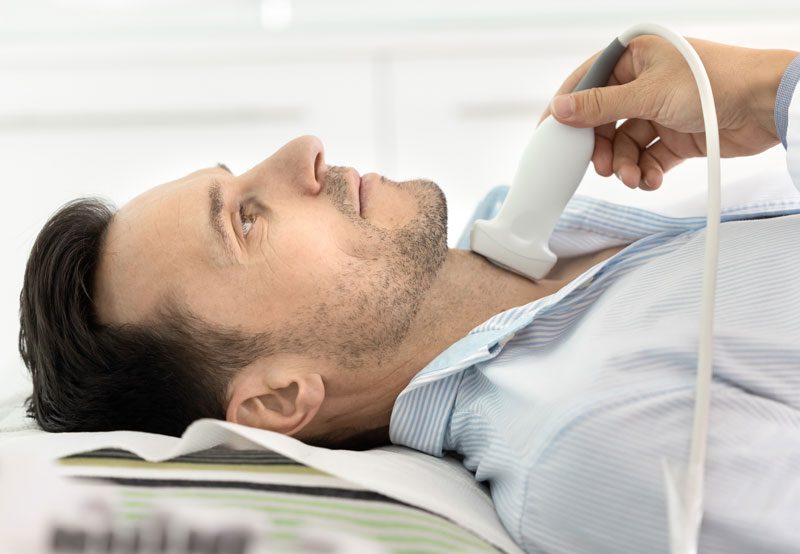
- Ultrasound: Primary imaging tool to evaluate thyroid nodules and lymph node involvement
- Fine-needle aspiration biopsy: Confirms malignancy and determines cancer type
- Molecular testing: May be used for indeterminate biopsy results to guide management
- Blood tests: Thyroid function testing to assess hormonal status
- Cross-sectional imaging: Computed tomography or magnetic resonance imaging in select cases to evaluate advanced disease
Diagnosis focuses on distinguishing malignant from benign nodules and defining disease extent.
Treatment Options
Treatment depends on the type of thyroid cancer, tumor size, extent of spread, and patient-specific factors.
- Surgical management: Thyroidectomy (removal of the entire thyroid gland for most confirmed cancers), lobectomy (removal of one thyroid lobe in select low-risk, localized cases), neck dissection (removal of involved lymph nodes when cancer has spread regionally)
- Radioactive iodine therapy: Used after surgery in certain cancers to eliminate residual thyroid tissue or microscopic disease
- Thyroid hormone replacement: Lifelong therapy following total thyroidectomy to maintain normal metabolism and suppress cancer recurrence
- Targeted or systemic therapy: Reserved for advanced, recurrent, or iodine-resistant disease
- Active surveillance: Appropriate for carefully selected low-risk cancers
Surgical treatment emphasizes preservation of the recurrent laryngeal nerves and parathyroid glands.
When to See a Specialist
Referral to a specialist is recommended for patients with a thyroid nodule, abnormal biopsy results, unexplained voice changes, or confirmed thyroid cancer. Early evaluation by an experienced head and neck surgeon or endocrinologist supports accurate diagnosis, individualized treatment planning, and long-term monitoring to achieve excellent oncologic and functional outcomes.