
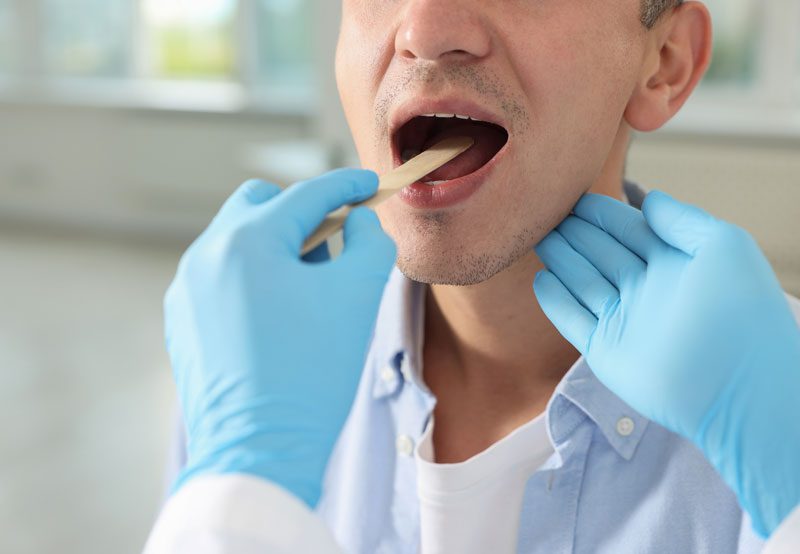
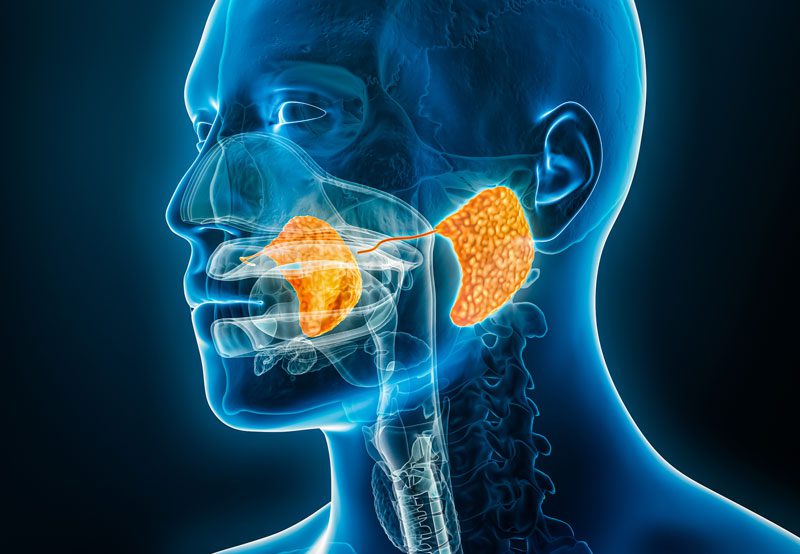
Salivary gland tumors are abnormal growths that arise within the salivary glands, which are responsible for producing saliva to aid in digestion and oral health. These glands include the major salivary glands (parotid, submandibular, and sublingual) as well as numerous minor salivary glands distributed throughout the mouth and throat. Salivary gland tumors may be benign or malignant, with benign tumors occurring more frequently. Accurate diagnosis is essential, as treatment and prognosis vary widely depending on tumor type, location, and behavior.
Causes
The exact cause of most salivary gland tumors is not fully understood, but several factors have been associated with their development.
- Cellular mutations: Abnormal growth of glandular cells can lead to benign or malignant tumor formation
- Radiation exposure: Prior radiation therapy to the head and neck region increases risk
- Age-related factors: Salivary gland tumors are more common in older adults, though they can occur at any age
- Smoking: Strongly associated with certain benign tumors, particularly Warthin tumors
- Genetic influences: Some tumors are linked to inherited conditions or molecular alterations
Salivary gland tumors most commonly arise in the parotid gland, and the majority of parotid tumors are benign. In contrast, tumors of the sublingual and minor salivary glands are more likely to be malignant.

Symptoms
Symptoms depend on the gland involved, tumor size, and whether surrounding nerves or tissues are affected. Many tumors are slow-growing and painless, particularly benign lesions.
- Painless lump or swelling: Often near the ear, jaw, neck, or inside the mouth
- Facial asymmetry: Visible swelling on one side of the face or neck
- Facial weakness or numbness: Suggests involvement of the facial nerve, more concerning for malignancy
- Pain or discomfort: May occur with rapid growth or infection
- Difficulty swallowing or opening the mouth: Seen with tumors affecting deeper structures
- Ulceration or bleeding: More common with malignant tumors of minor salivary glands
Any facial mass associated with nerve weakness or rapid growth requires prompt evaluation.
Diagnosis
Evaluation focuses on determining whether a tumor is benign or malignant and defining its extent.
- Comprehensive head and neck examination: Assessment of mass size, mobility, and facial nerve function
- Imaging studies: Ultrasound, computed tomography, or magnetic resonance imaging to evaluate tumor characteristics and relationship to surrounding structures
- Fine-needle aspiration biopsy: A minimally invasive method to sample tumor cells and guide treatment planning
- Core needle or open biopsy: Used selectively when fine-needle aspiration is inconclusive
- Facial nerve assessment: Particularly important for parotid gland tumors
Imaging and biopsy findings are integrated to guide surgical planning and determine the need for additional therapy.
Treatment Options
Treatment depends on tumor type, location, and risk of recurrence or spread. Surgical removal is the primary treatment for most salivary gland tumors.
- Surgical excision: Removal of the tumor with preservation of surrounding structures when possible
- Parotidectomy: Partial or total removal of the parotid gland, with careful identification and protection of the facial nerve
- Submandibular or sublingual gland resection: Performed when tumors arise in these glands
- Neck dissection: May be required if malignant tumors have spread to nearby lymph nodes
- Radiation therapy: Often recommended after surgery for malignant tumors with high-risk features
- Reconstructive procedures: May be used to restore facial contour or nerve function when needed
Benign tumors are typically cured with surgery, while malignant tumors may require combined treatment to achieve optimal outcomes.
When to See a Specialist
Evaluation by a head and neck specialist is recommended for any persistent lump near the jaw, ear, or neck, particularly if it continues to grow or is associated with facial weakness, pain, or numbness. Early specialist assessment improves diagnostic accuracy and allows for timely treatment, helping preserve facial function and reduce the risk of recurrence or complications.