

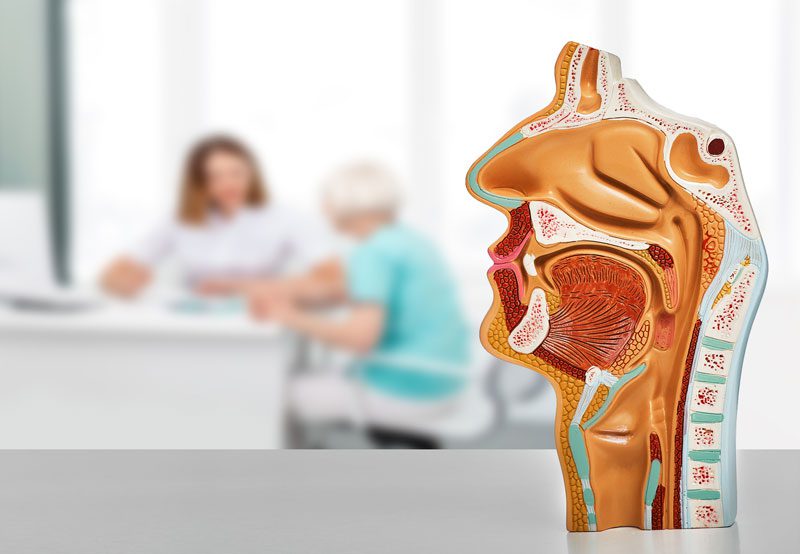
Paranasal sinus cancer is a rare group of malignancies that arise in the air-filled cavities surrounding the nasal cavity, including the maxillary, ethmoid, frontal, and sphenoid sinuses. These cancers often grow silently because the sinuses provide space for tumors to expand before causing symptoms, leading to delayed diagnosis in many cases. Most paranasal sinus cancers are squamous cell carcinomas, though several other tumor types may occur depending on the tissue of origin. Management is complex due to the proximity of the sinuses to the eyes, brain, cranial nerves, and skull base, requiring specialized multidisciplinary care.
Causes
Paranasal sinus cancer develops following chronic exposure to carcinogenic or inflammatory factors that damage the lining of the sinuses.
- Occupational exposures: Wood dust, leather dust, nickel, chromium, and certain industrial chemicals
- Tobacco use: Smoking increases risk, though less strongly than in other head and neck cancers
- Chronic sinus inflammation: Long-standing irritation may contribute in select cases
- Human papillomavirus (HPV): Associated with a subset of sinonasal tumors
- Radiation exposure: Prior radiation to the head and neck region
- Environmental pollutants: Prolonged inhalation of airborne toxins
Different sinus locations and histologic subtypes may be associated with distinct risk profiles.

Symptoms
Symptoms are often nonspecific and may resemble chronic sinus disease, contributing to delayed recognition. As tumors enlarge, symptoms typically progress.
- Persistent nasal congestion or obstruction, often on one side
- Facial pain, pressure, or swelling
- Nosebleeds (epistaxis)
- Reduced or lost sense of smell
- Loosening of teeth or dental pain without clear cause
- Eye symptoms (double vision, tearing, bulging of the eye, or vision changes)
- Facial numbness or tingling (suggesting nerve involvement)
- Headache or sinus pressure that does not resolve
Advanced disease may involve the orbit, skull base, or cranial nerves.
Diagnosis
Accurate diagnosis requires thorough evaluation to define tumor type, extent, and involvement of nearby critical structures.
- Comprehensive head and neck examination: Including nasal endoscopy
- Endoscopic evaluation: Direct visualization of the nasal cavity and sinus openings
- Biopsy: Tissue sampling to confirm malignancy and histologic subtype
- Imaging studies: Computed tomography to assess bone involvement and magnetic resonance imaging to evaluate soft tissue, orbital, and intracranial extension
- Positron emission tomography: Used in select cases to assess regional or distant spread
Precise staging is essential for treatment planning and prognosis.
Treatment Options
Treatment is individualized based on tumor location, stage, histology, and patient health. Management typically involves a multidisciplinary head and neck cancer team.
- Surgical resection: Primary treatment for many tumors, often using endoscopic, open, or combined skull base approaches
- Endoscopic sinus and skull base surgery: Minimally invasive techniques may reduce morbidity in appropriately selected cases
- Radiation therapy: Commonly used after surgery to reduce recurrence risk or as primary treatment when surgery is not feasible
- Chemoradiation: Considered for advanced disease, unresectable tumors, or high-risk pathologic features
- Reconstructive surgery: May be required to restore function and appearance following extensive resections
- Rehabilitation services: Vision, speech, and swallowing support as needed
Treatment planning prioritizes cancer control while protecting vision, neurologic function, and quality of life.
When to See a Specialist
Evaluation by a head and neck specialist is recommended for persistent unilateral nasal symptoms, recurrent nosebleeds, facial swelling, or eye-related changes that do not respond to standard sinus treatments. Early specialist referral improves diagnostic accuracy and expands treatment options, particularly for tumors detected before involvement of the orbit or skull base.